
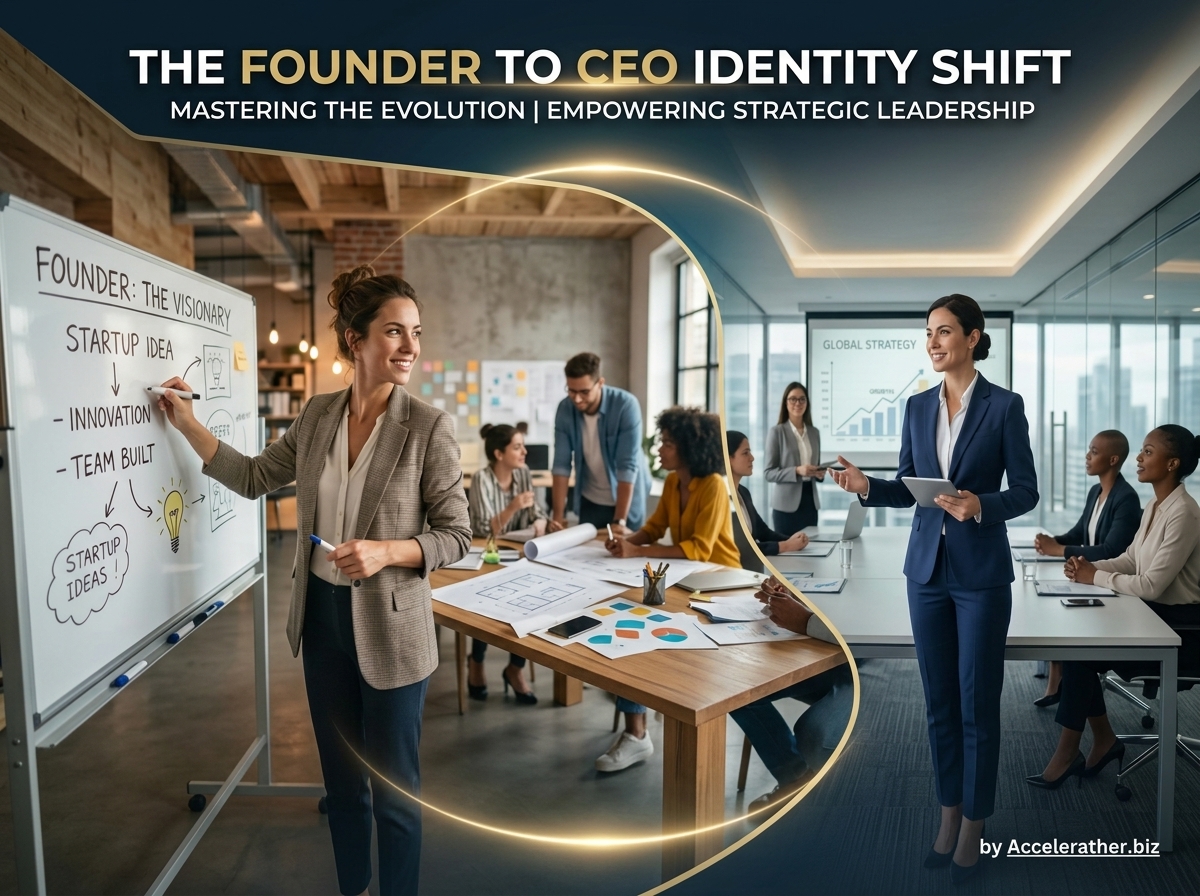
From Founder to CEO — Making the Identity Shift
You started as a founder. You had an idea, a laptop, and a fire in your belly. You did everything—sales, product, customer service, finance. But as your business grows, the skills that got you here are not the skills that will take you there. The shift from founder to CEO is not a promotion. It is a transformation.
The Founder’s Trap
Many women entrepreneurs remain trapped in the founder role. They stay in the weeds, doing everything themselves, because letting go feels risky. But a business cannot scale if the founder is the bottleneck. A 2023 study by Harvard Business Review found that founders who successfully transition to CEO delegate 40% more of their operational tasks within the first year—and their companies grow 2.5 times faster as a result.
Real Case: Whitney Wolfe Herd and Bumble
Whitney Wolfe Herd founded Bumble in 2014. In the early days, she was involved in every detail—product design, marketing, investor pitches. But as Bumble grew from a dating app to a global social platform, she had to change. She hired experienced executives, built a leadership team, and shifted her focus from doing to directing. In 2021, she took Bumble public, becoming the youngest self-made female billionaire at the time. She didn’t stop being a founder. She became a CEO.
Global Research: The CEO Mindset
A 2024 study by the Center for Creative Leadership found that founders who adopt a CEO mindset—focusing on strategy, culture, and capital allocation rather than daily operations—report 35% higher business growth and 50% lower burnout. The research identifies three critical shifts: from doing to delegating, from reacting to planning, and from managing tasks to leading people.
How to Make the Shift
- Audit your time.
- Hire for your weaknesses.
- Build a leadership team.
- Set a CEO schedule.
- Get a coach or peer group.
You will always be the founder. But to grow, you must also become the CEO.