
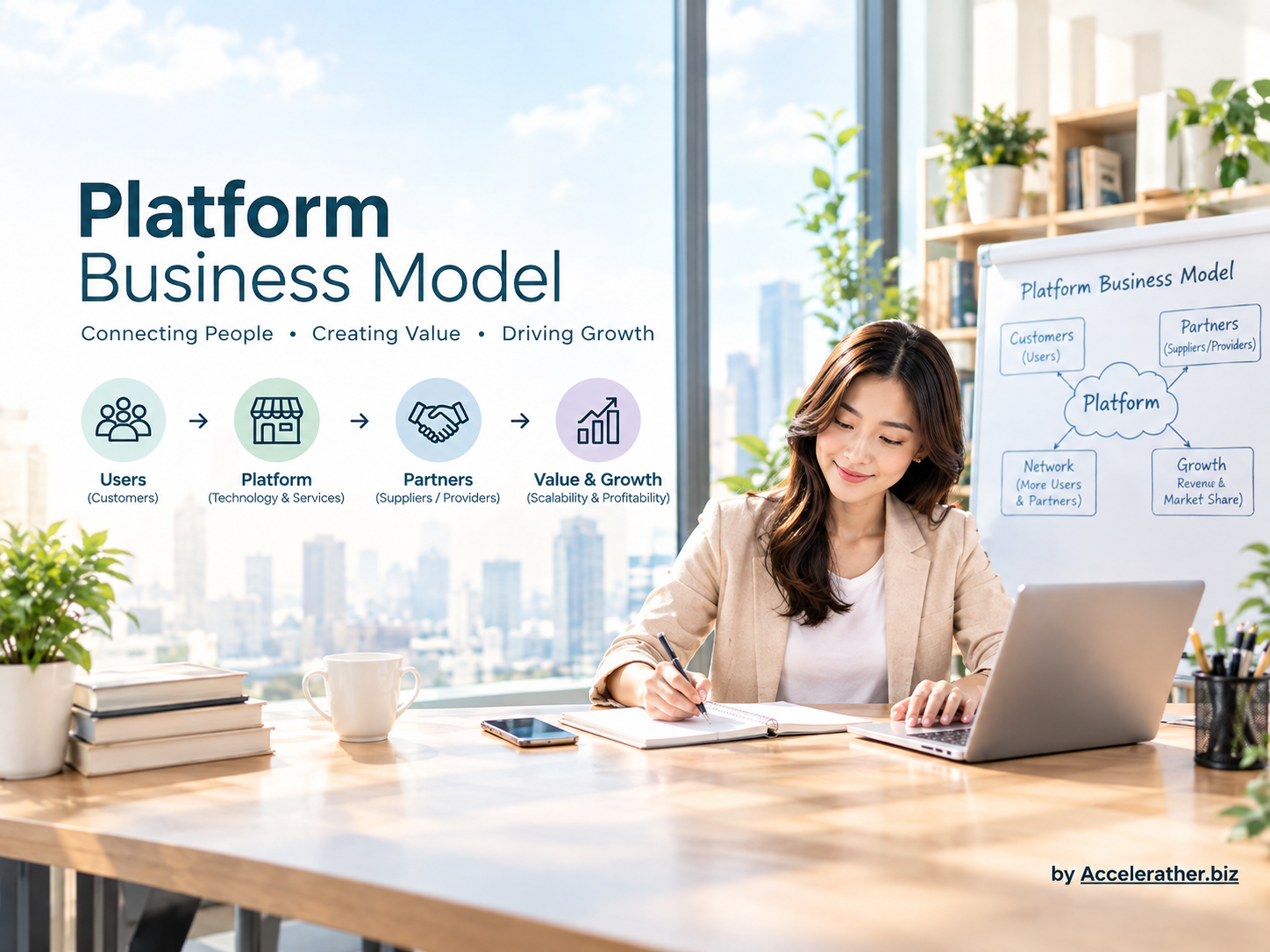
From Product to Platform — Scaling Through Innovation
You started with a product. A single offering. A clear solution. But sustainable growth often requires more than selling more of the same thing. It requires evolving from a product to a platform—a business that creates value by connecting people, resources, and opportunities.
The Platform Advantage
A 2024 study by McKinsey & Company found that platform businesses grow 2.5 times faster than traditional product businesses and enjoy 30% higher profit margins. Platforms create network effects: the more people use them, the more valuable they become. For women-led SMEs, the platform model offers a path to scale without proportional increases in cost.
Real Case: Whitney Wolfe Herd and Bumble
Whitney Wolfe Herd started Bumble as a dating app where women make the first move. But she didn’t stop there. She evolved Bumble into a platform—adding Bumble BFF for friendships, Bumble Bizz for professional networking, and Bumble Fund for investing in women-led businesses. Today, Bumble is not just an app. It is an ecosystem. It went public in 2021 at a valuation of over $13 billion. Wolfe Herd did not just build a product. She built a platform.
Global Research: The Platform Economy
A 2025 report by the World Economic Forum found that 70% of new economic value created in the next decade will come from platform-based business models. The report notes that women entrepreneurs who adopt platform thinking are 40% more likely to scale beyond $1 million in revenue. The platform economy is not a niche. It is the future.
How to Evolve from Product to Platform
- Identify the network.
- Start with a service.
- Add value beyond the transaction.
- Build community.
- Think in ecosystems.
A product solves a problem. A platform solves a system of problems. Think bigger.